
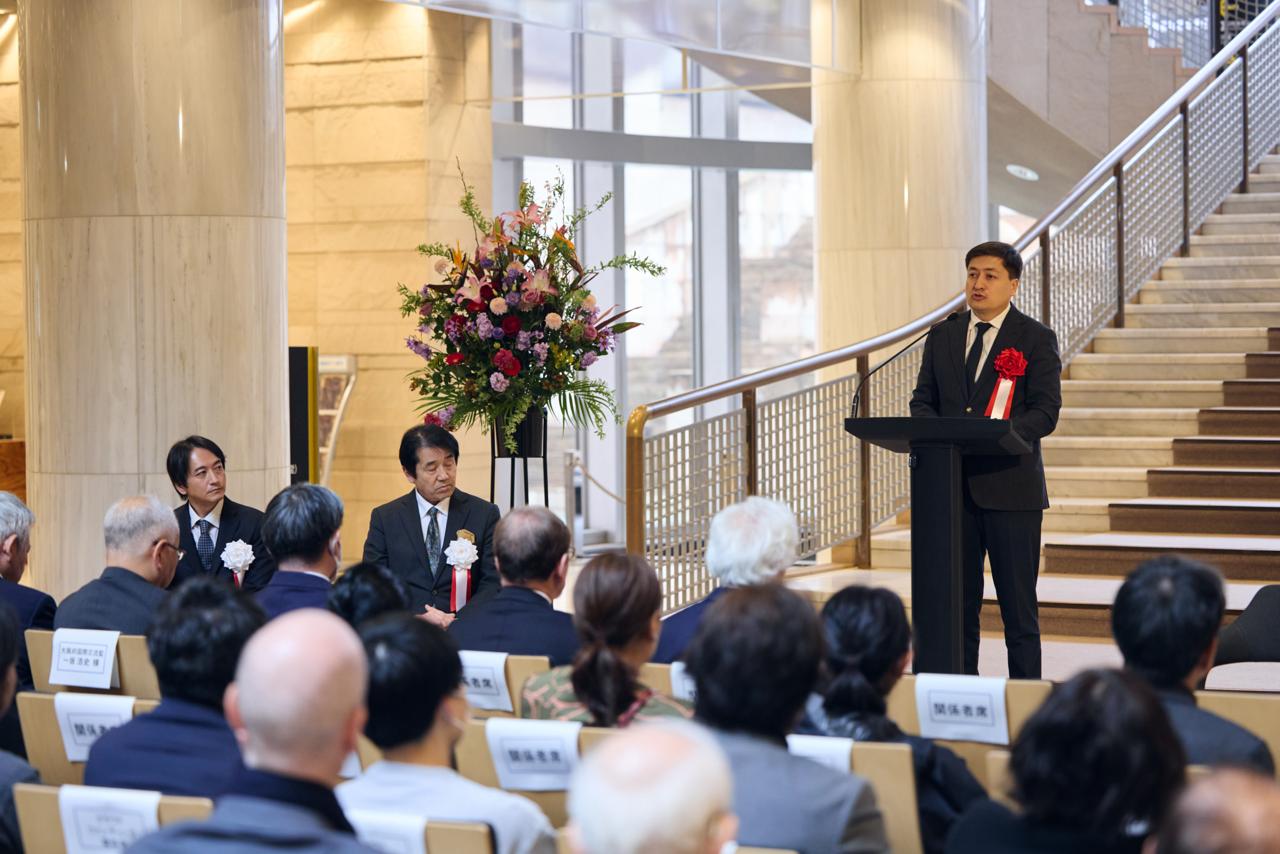
An international exhibition titled “Echoes of Silk Road Traders: Samarkand’s Relics and Eurasian Ties” has opened at the National Museum of Ethnology in Osaka, Japan.
The exhibition brings together over 200 items, including 63 archaeological and museum artefacts from Samarkand, provided by the Institute of Archaeology and the Samarkand State Museum-Reserve. A significant portion of the material originates from the Kafir-kala site and reflects the results of Uzbek–Japanese archaeological research.
The project highlights the role of merchants in the history of Central Asia and proposes viewing the Silk Road not only as a trade route, but also as a space of cultural, religious, and social exchange that connected different regions of Eurasia.
The exhibition will be open to visitors until 2 June 2026.